CARDMANSHIP MAGAZINE · OCT 2026 · ISSUE 01[ English Edition ]
3D ACAAN
Effect
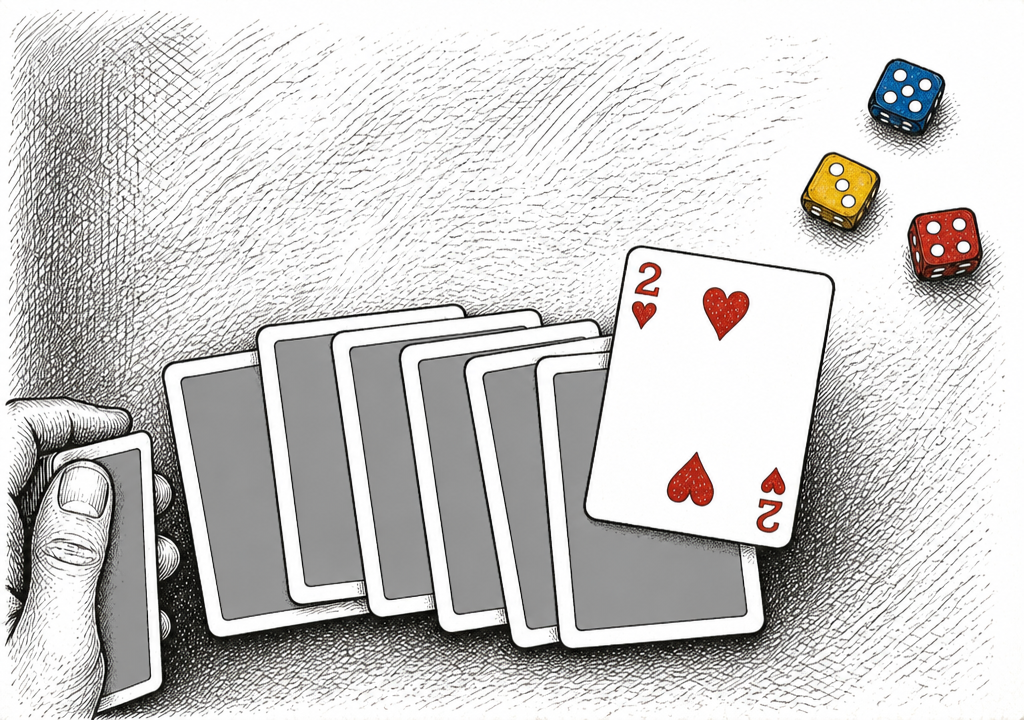
A spectator rolls 3 dice and secretly chooses 1 of the numbers rolled. They then remember the card at that number from a shuffled deck.
The performer never asks for the card. Yet, when the 2 unchosen numbers on the dice are added together, the spectator deals down to that exact sum and finds their thought-of card.
Setup
- 3 dice, preferably in different colors
- A shuffled deck of cards
Performance
This is a semi-automatic, principle-based routine using dice. Apart from the required items, no advance preparation is needed.
Have the spectator freely roll the 3 dice until they are satisfied. Tell them that the numbers facing up on the 3 dice should all be different, and make sure they do not roll the lowest combination: 1-2-3.
You can say: "In a moment, you're going to think of one of the numbers you just rolled. That's why we want three different numbers, so you have three distinct choices."
Once the spectator is satisfied with the roll, mentally add the 3 numbers and subtract 7. The result will be your key number.
For example, if the spectator rolls 3, 4, and 5, your key number is 3 + 4 + 5 − 7 = 5.
The spectator shuffles the deck and hands it to you. Ask them to mentally choose any 1 of the 3 numbers they rolled, and remember the card at that position.
Show the top card to the spectator, call out "1," and deal it face down onto the table. Show the next top card, say "2," and deal it face down on top of the first card. Repeat this process up to 6 cards. Since a die has only 6 faces, their number will always be 6 or less.
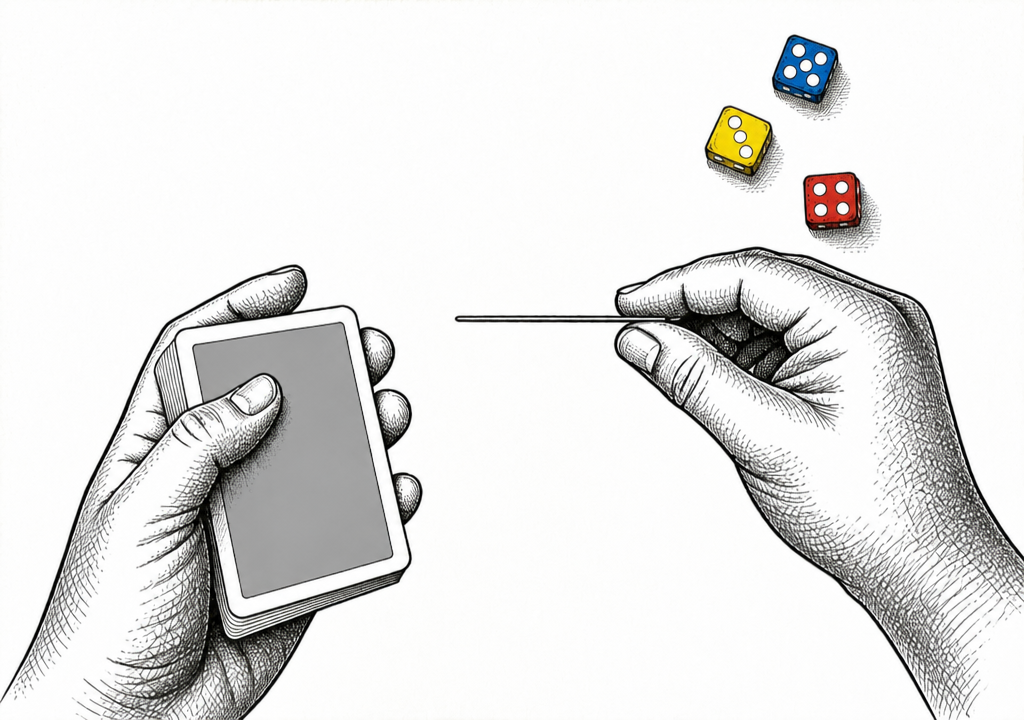
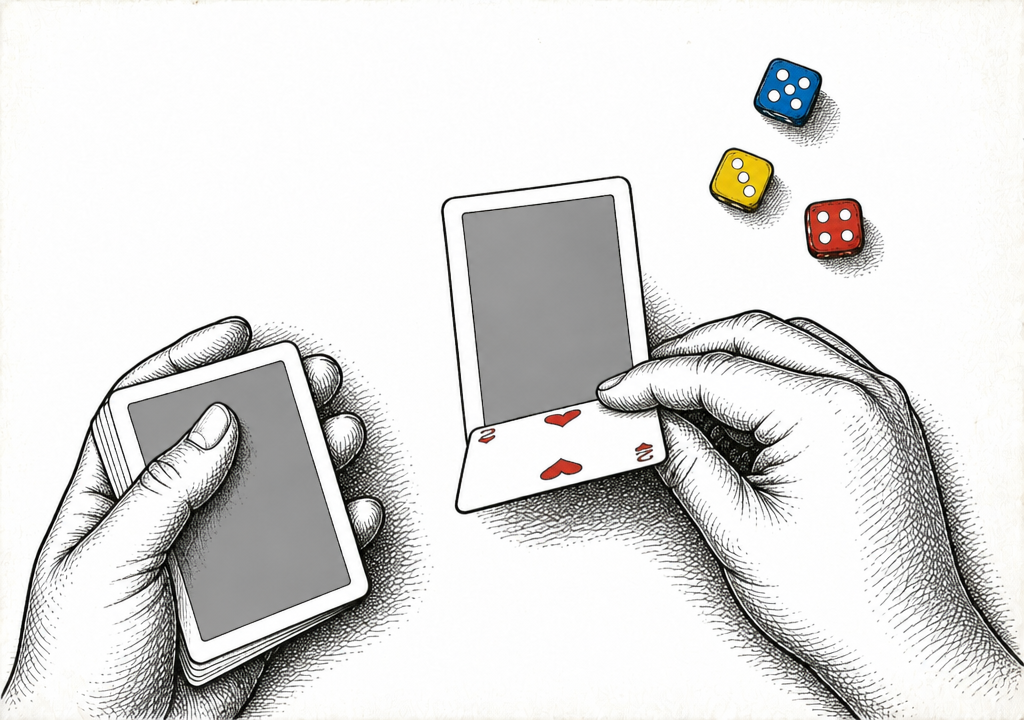
Now recall your key number. Count that number of cards from the top of the deck in your hands (by spreading or with a Pinky Count) and hold a break beneath them. In this example, you hold a break under 5 cards.
Form a Tilt with this top block of cards, pick up the 6 cards from the table, and insert them together into the Tilt break.
Afterwards, you can perform a false shuffle or cut, as long as you keep the top stack undisturbed.
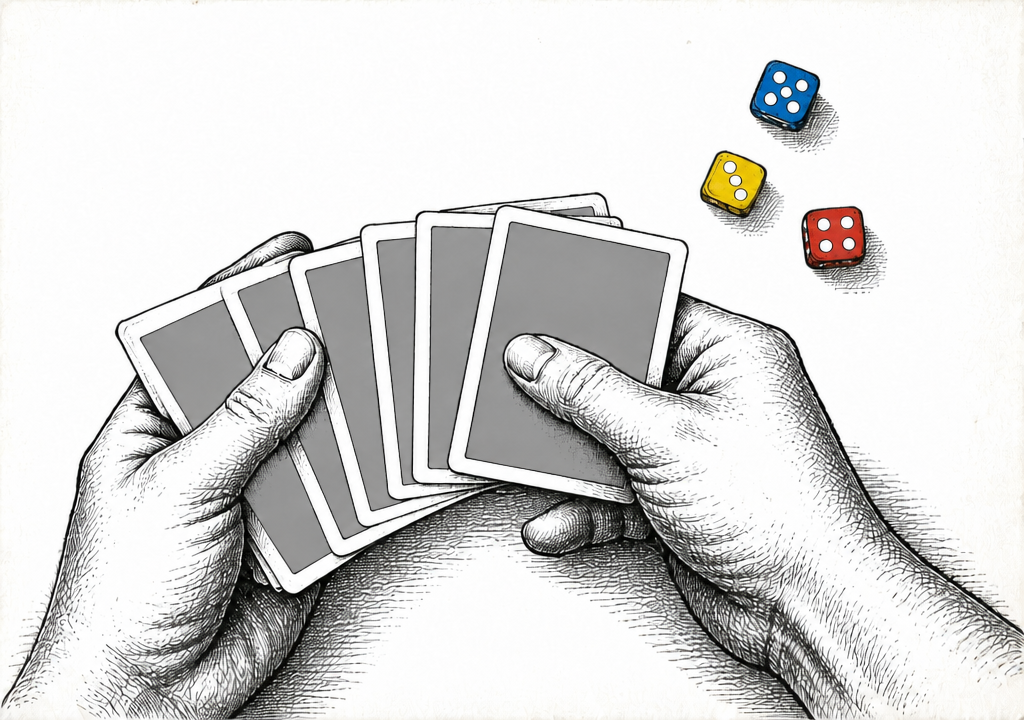
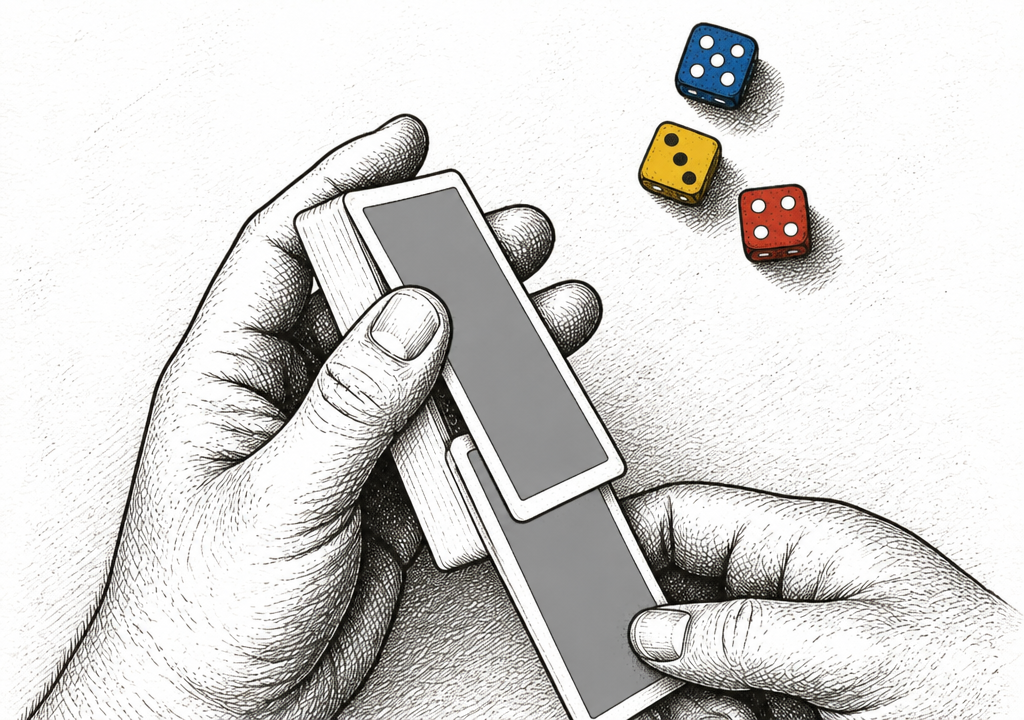
Ask the spectator for their thought-of number (suppose they say 4). Then deliver the presentation:
"You freely thought of a number, and from this deck of 52 cards that you shuffled yourself, you could have ended up with any card, right? And you freely rolled three numbers, which seem completely unrelated, don't they? Yet I believe every choice we make is connected in mysterious ways. Out of those three numbers, you freely picked one. You could have just as easily chosen 3 or 5; no one could have known your choice in advance. Those other two numbers were left unchosen. But, looked at from another angle, leaving them behind was also a kind of reverse choice."
Add the 2 numbers the spectator did not pick: 3 + 5 = 8.
Deal the cards one by one down to the 8th card. Turn it over to reveal the spectator's thought-of card.
Afterthought
My starting point for this effect was a trick by Roy Walton called "The Karl Le Fong Trick," in The Complete Walton, Vol. 1. I don't really like the method, so I wanted an easy and elegant solution for the effect. Here is the result.
The Spanish magician Ramon Rioboo uses a similar principle in a different trick called "Inverse Compensation."
Campagne pour le Numéro 2
Aidez-nous à atteindre 2 000 abonnés
Le magazine Cardmanship est actuellement entièrement gratuit et sans publicité. Lorsque notre compte Instagram (@albertcardman) atteindra 2 000 abonnés, le Numéro 2 sera également publié de manière totalement gratuite.